Saturday, August 28, 2010

Santa Barbara Artists Open Studio Tour

A treasure trove of world-class original art and a rare peek inside artists' studios is much anticipated each year when Santa Barbara's leading artists open their private studios for the annual Open Studios tour. This year's program has been expanded to include a month-long preview exhibition giving tour attendees extra time to plan which of the more than 40 studios they want to visit during the visually enticing two-day tour.

The Open Studios Tour guides visitors to charming artists' studios through the stunning back roads, neighborhoods and estates throughout Santa Barbara on Saturday August 28th and Sunday August 29th, from 11:00 am to 5:00 pm.

Prior to the tour there will be two exhibition parties at the Santa Barbara Frame Shop and Gallery located at 1324 State Street (at Arlington Plaza,) Santa Barbara, CA. The artists from the tour will be in attendance at the parties, and one piece of each artist's work will be on display. During these festive soirees, collectors and tour participants mingle and strategize about which studios to visit during the tour.

The Advance Party is from 5:00 to 8:00 pm on Thursday, August 5th. (This is the Santa Barbara Downtown Organization's 'First Thursday' celebration, and is also the 2nd day of Fiesta.)

The second Opening Reception will take place 5:00 to 8:00 pm on Friday August 27th.

Santa Barbara Studio Artists Annual Tour has had international acclaim since 2002 featuring: landscape, contemporary, and figurative painting; sculpture and assemblage; and abstract, impressionist, and expressionist styles by top US artists based in Santa Barbara. Santa Barbara Studio Artists is a nonprofit, juried organization of professional fine artists dedicated to raising the profile of Santa Barbara as a destination for the arts.

Friday, August 27, 2010

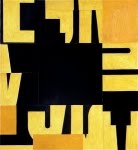
Artist Cecil Touchon


I look at Cecil Touchon’s work and feel like I’m seeing more clearly something that was always present in language: a certain claustrophobia. I think this applies to much of concrete poetry as well. There’s a need in our culture to find the recognizable letters, the meaning, the obvious context of words and to move fluidly to the next word without becoming “caught”. Also, to avoid confronting that terror that seems to plague all texts, that we or they will not “get it”. With concrete poetry we’re often pressed up against language and all of it’s parts. these collages contain that panic.

Thursday, August 26, 2010

Learning Composition

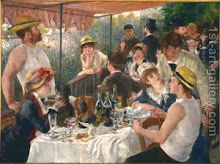
Composition is all about placing the elements of an art piece where they deliver most impact and overall balance. If you've ever studied the artworks of the masters you might have noticed how calming they appear. With an almost magical ease they slip inside you delivering great viewing satisfaction. This is not just because they are stunningly realistic to behold and richly detailed, but also because the artist has taken great care in placing the various elements in the right places. The important elements are usually placed where they create balance and communicates most effeciently across to the beholder.

TIP: Remember this when starting on a new piece; place the important elements of your work where they are most pleasing to the eye and communicate most efficiently across to the beholder.

The above goal can be accomplished in many ways and one of those is to conform to the rule of thirds. By dividing your piece into nine equally sized rectangles or squares and placing key elements on, or close to some of the focal points and along the lines, you can create a much more eye-pleasing piece of art. The four spots where the lines meet are called focal points where the upper and lower right spots are the most important. This is because most of us were taught to read from left to right, hence it is the most natural way for us to look at an image also. Look at the picture below.


More Composition Styles

There are many other ways to compose an art piece; the L-Composition, the Iconic composition, and the Cross composition just to name a few. They each have their strenghts in communicating across to the viewer. Look at the illustrations below of the three different compositions styles below. By placing important elements on top of or along the lines, or directly on the focal points you can create a more effective work of art.


Returning shortly to the rule of thirds it is important to mention that the focal points do not necessarily need to be covered by solid objects. For instance, if you wish your piece to be spacious you can easily let the area around some of the focal points have alot of surrounding space. Another important thing is to not have important elements on the different focal points in the same artwork competing with eachother over the viewers attention. That way it'll do more harm than good, and break the balance you are trying to achieve in your artwork.

The Final Words (and more composition stuff)

This short tutorial is only meant as a preliminary step into the world of art composition, and a brief reminder that composition is indeed very important. Solid composition can make a mediocre piece look good, and a good one look great. Once you are comfortable with the basics you can even combine different styles of composition but that takes alot of practice to master. The possibilities are pretty much endless. Before the final punctuation of this art tutorial, I want to share a link to one of the best in-depth composition tutorials the web has to offer (well at least in my own humble opinion) The webs best art composition tutorial.

Enjoy!